
Like many family businesses, the Milstein family behind Burlington Coat Factory built their business the old-fashioned way — through hard work, grit, and passion. Creaghan McConnell Gould celebrates and commends these families for their dedication to their family business and the communities they serve.
Founded by children of immigrants and known for its accessible pricing and commitment to customer service, Burlington Coat Factory is an iconic staple in the fabric of American retail. After more than three decades of ownership, Burlington Coat Factory was sold to Bain Capital — a Boston-based private investment firm — for US$2 billion in 2006. While today the company is devoid of family involvement, the Milstein family’s story underscores the importance of knowing when to seek external support in the midst of intergenerational business challenges, and how to ensure a business endures during a shift in passion.
Known for their hands-on and humble approach to business (still ticketing merchandise on the sales floor and taking public transit to work as executives), the Milsteins tended to their family business closely, humbly, and with intention. So, the family faced a challenge: How do you ensure the company continues to thrive when the founding skills, passion, and circumstances have changed? In the case of the Milstein family, they embarked on a thoughtful process of determining the family’s future, early enough for the moment to be opportune.
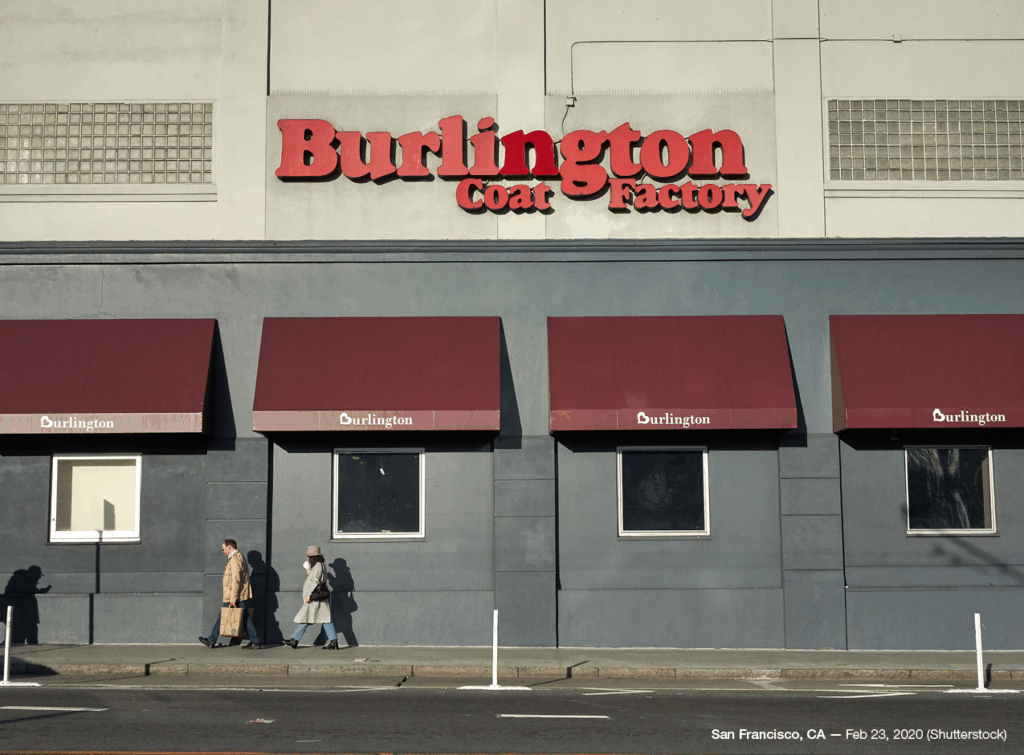
Beginnings in New Jersey
Picture this: It’s 1972, the year Henrietta Milstein saved US$75,000 in wages from teaching and convinced her husband, Monroe, to purchase a former dress factory outlet in Burlington, New Jersey, to transform it into Burlington Coat Factory.
From a young age, Monroe had worked with his father in the garment business, making outerwear a familiar territory. Joining forces with Henrietta to venture into the risky retail business was an act of defiance against his traditional, risk-averse father.
Monroe spun his learnings into earnings. By 1983, the Milsteins took Burlington Coat Factory public. Henrietta’s humble dream of one store transformed into 31 stores across the United States, surpassing US$132 million in annual sales.

The limits of internal leadership
As the company grew, Monroe’s three sons — Lazer, Andrew, and Stephen — stepped into leadership roles of their own, each overseeing different stores and responsibilities. Their dynamic was straightforward and grounded. When asked to reflect on how he worked with his family, Stephen Milstein stated:
“It all just works. Everyone has particular responsibilities and departments they take care of. My mother and father drove in together every morning, then my mother went to her office and my dad to his. They rarely had lunch together, but would meet at 6:00 and drive home, sometimes talking about what had gone on all day, sometimes not. But home was home. And business was business.” — Family Business Magazine, 2006
That clarity served them well for many years. However, as we see with some family enterprises, there eventually comes a point where passion, scale, and long-term sustainability need to be evaluated with honesty — not to diminish what the family has built, but to protect it.
For the Milsteins, this crossroads came at a deeply personal time. Henrietta — whose savings and vision had laid the foundation for the very first store — was diagnosed with ovarian cancer and passed in 2001. Her absence marked more than the loss of a co-founder; it shifted the emotional centre of the business itself. Andrew Milstein later reflected that his father “never quite regained his passion for business.” Monroe continued to show up, manage operations, and keep the company steady, but the fire that fueled Burlington’s growth had dimmed considerably.
Preserving a legacy
By the mid-2000s, the business was larger, more complex, and operating in a rapidly changing market. Monroe’s oldest son, Lazer, had already moved on from the company around 1985 to pursue a different career path. In 2005, when Burlington Coat Factory was at its peak of valuation, the Milsteins made a strategic decision to transition the company to new leadership.
In May 2025, Monroe died at age 98 in Florida, where he had retired after selling the business. In an ideal world, perhaps the Milstein family would still be running the enterprise today with the same fervour they once possessed, hand ticketing markdowns and running their famous annual coat drive. However, through strategically offboarding his family business, he managed to leave behind not only a story for business families to admire but a national chain with enduring strength. Today, over 1,100 Burlington stores continue to operate, employing more than 75,000 people, dressing countless Americans every year.
Without proper leadership and capability, holding onto a family enterprise can lead to its downfall and potentially, financial loss. Firstly, families need to assess whether they possess the necessary ingredients for success. Secondly, they need to be willing to intentionally invest in their people and capabilities, including aligning on what they have to offer. If the family discovers that passion is lacking, they can either cultivate it or consider redeploying their capital. It all begins with an honest assessment of what the family has and what the business needs. — Bob Gould, CMG Partner
In the end, the Milsteins demonstrated that honouring and preserving a legacy goes beyond what a business needs, but what a family can realistically and consistently give. What the family built was extraordinary, but how they preserved their family’s legacy also deserves its own praise.
Noor Choudhry is a writer and Content Specialist at Creaghan McConnell Gould.
Download and read this story as a PDF here.