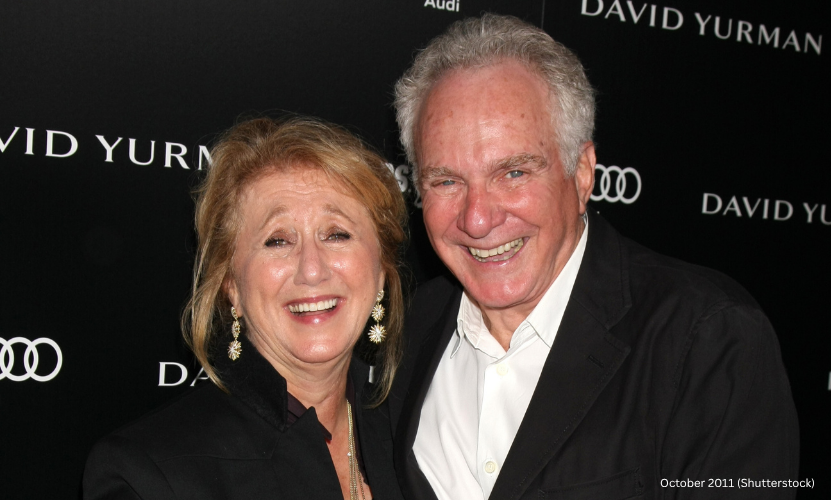
Many things about the Yurman family are unconventional — especially in the world of luxury fashion and business. “Sybil was a teenage runaway,” David Yurman says of his partner in life, art, and enterprise. “I’m a hitchhiker, dyslexic, major ADD, flipping from this to that. The only thing that kept us together and focused was the love and passion of art.” Growing up, their son Evan’s school bus would drop him off at his parents’ design atelier in midtown Manhattan. He was only allowed to stay up past his bedtime if he was doing something creative. His parents call their jewelry business “one long art project.”
Though their story defies convention, the Yurman family and the David Yurman jewelry company embody many of the traits that Creaghan McConnell Gould recognizes and celebrates in the most successful family enterprises. Family businesses start by creating something that nurtures culture, as the Yurman family has done. They then wrap the economics around that creation, allowing the art — and the values behind it — to endure across generations.
The David Yurman company was built by the artistry of two creatives, David and Sybil Yurman. Both prolific artists in their own right — Sybil, a painter and David, a sculptor — the two joined forces in what they call “the accidental forming of a jewelry brand.” This “accident” has become one of the preeminent luxury jewelry houses in the world. Family-owned and privately-held, its collections are sold at over 350 locations worldwide, with a team of nearly 2000 artisans and employees. Though the company does not publicly disclose its corporate valuation, the brand’s estimated annual revenue is reported between US$1 billion and $1.7 billion.
Unique origins
David and Sybil Yurman were born two months and two blocks apart from one another in the Bronx in 1942. Their fascinating individual journeys as artists would eventually lead their paths to cross in 1969, when Sybil was hired to manage sculptor Hans Van de Bovenkamp’s studio in Greenwich Village, where David was working as a foreman. Their first date was on Sybil’s 25th birthday, and they have been together ever since.
The world of jewelry is dominated by European houses, often with centuries of history, aristocratic investors, and even royal warrants behind them. David and Sybil Yurman on the other hand, started their jewelry business with a $500 loan from the Hebrew Free Loan Society, a New York-based aid organization. They spent the next decade building their way up in the American craft scene, loading their travelling display stand and their jewelry wares into their 1962 Cadillac day after day as they travelled to different markets and craft shows across America, including Woodstock Music Festival in 1969. They developed their collections, grew a following, and began to be noticed by high-profile distributors like Saks Fifth Avenue and Bloomingdale’s. They remember the pivotal moment of realization: “This is the beginning of something bigger than we imagined.”
David and Sybil attribute learning “that art and business can coexist” to their time with Van de Bovenkamp. Their time at his studio allowed them to see that they could make art while running an art-related business, and most importantly, that they could do it all while retaining their artistic integrity. They learned to apply their values as artists to what they call “the art of commerce.”
CMG Partner Marty McConnell shares:
“When we think about families like the Yurmans — who have built a luxury brand while staying true to their artistic roots — we see what sets successful multi-generational enterprises apart. It’s their ability to identify and preserve what we call the “magic thread” — that core set of principles and values that defines who they are and why they do what they do. Striving to understand this magic thread isn’t just helpful context; it’s the essential starting point for any meaningful engagement with a business family.”
The rising generation joins the team
David and Sybil’s son, Evan, shares his parents’ love for the craft and the family business. “It’s in his DNA,” says David. His parents never forced him to be a part of the business, but he was naturally drawn to it and began designing with them in his early teens. Evan is currently the President of the family company, as well as its Chief Creative Officer of design and marketing.
The Yurman family hold their relationships with their collaborators, employees, and customers as a core value. They visit their stores to meet customers and hear their thoughts and feedback. Their employees have always been seen as extended family members, and collaboration and teamwork have always been at the centre of the business. Evan continues this tradition. “I have visions and goals for the company, but I’m not going to be able to accomplish any of it without our people,” he says. “You can’t be a customer-centric business without being employee-centric too.”
On the Yurman family’s approach to their namesake brand, Marty shares his perspective:
“Ultimately, people don’t buy products or services — they buy People….the relationships with people they trust. Building that trust requires going beyond transactions to forge genuine understanding. The families who succeed in instilling and nurturing their principles, all the while growing their enterprises show us that staying connected to your magic thread isn’t just good for the soul; it’s good for business.”
The family and company also demonstrate what truly matters through their commitment to ethical business practices. They enforce a strict supplier code of conduct and uphold comprehensive training and accountability programs that protect and advance human rights.
“We have achieved what many would consider the American dream,” says David. “There was not really a blueprint or master plan, but from the beginning, there was a conviction to follow our North Star as artists.” For both David and Sybil, that means putting their artistry and their values over profit. They see it as a balancing act: being aware of trends in the design and fashion world, but always staying true to their own artistic integrity.
Evolving into the future
Evolution has always been central to the company. Evan believes it’s the key to longevity, but only when built on consistency and trust. “My parents’ approach to the business has been to build and survive —mine is to build and sustain.” Both generations understand that every phase of their business transcends marketing or brand-building. It’s about committing to strong values, prioritizing human connections, and bringing people together.
“We are now on our third generation of customers. They bring their jewelry into our stores and say, “My grandmother gave me this piece,” and they want to add something contemporary to it. We like the idea that people consider our pieces part of their legacy.”
— Sybil Yurman on the company being a legacy brand
While the David Yurman company may be unconventional in many ways, this generational jewelry handover mirrors what CMG consistently sees in successful family businesses. They remain committed to their creative vision, prioritize values over short-term profits, and maintain a long-term perspective on their legacy. David and Sybil, now alongside their son Evan, have built something enduring by forging their own path — staying true to their artistic integrity while building a business designed to last.
Marty shares his final thoughts:
“Business families that thrive across generations share a common trait: they know their “why.” These families don’t just build companies — they build legacies rooted in core values that guide every major decision. When a family truly understands what matters most to them, they can navigate growth, succession, and market changes while staying true to their principles. This clarity of purpose becomes the compass that keeps multiple generations aligned and the enterprise resilient.”
References/further reading:
- The Wall Street Journal: How Isolating Has Changed David Yurman’s Perspective on Business
- The Art of Timelessness: Inside David Yurman’s Family-Built Empire
- For David Yurman, the Creative Process Is Never-Ending
- An Artist’s Story
Download and read this article as a PDF here.
Jessika McQueen is a freelance writer from Toronto.