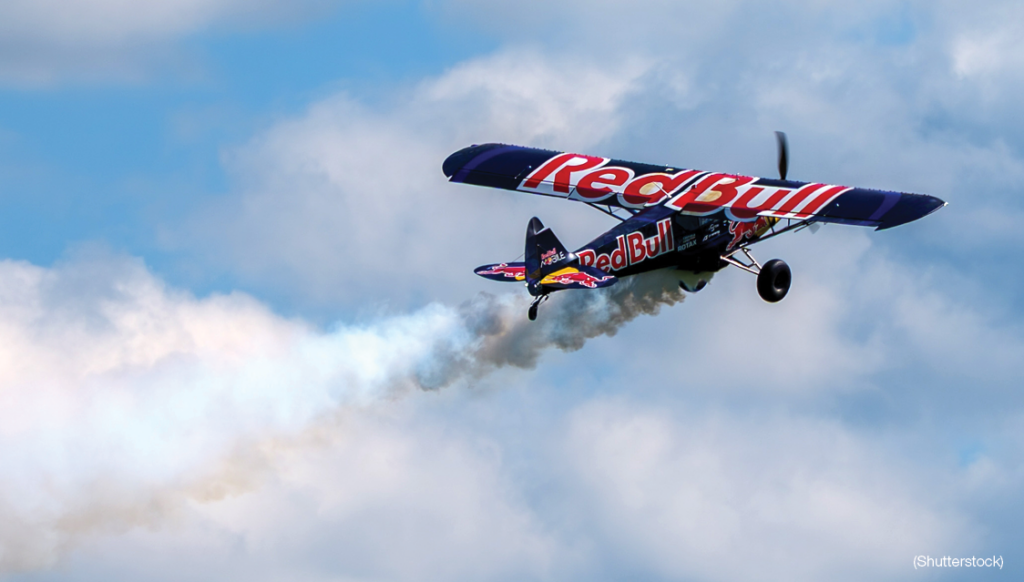
From elite athletes to cramming students, busy professionals to bar patrons, everyone knows Red Bull. And for good reason: it leads its industry with 28% of the global market ahead of Monster’s 17%, has won countless championships in Formula 1 and extreme sports, and runs a media house that has won several Emmys. A lesser-known triumph is the founder’s succession planning. Red Bull is a compelling case of owner succession without leadership succession — and in true Red Bull form, the approach was unconventional.
CMG first profiled the Mateschitz and Yoovidhya families behind Red Bull a few years ago. We’re revisiting the story because it offers a rich family-business lesson: how to protect a founder’s vision while allowing the next generation to step into ownership on its own terms. It’s a reminder that succession is not always about replacing the person at the centre, but designing continuity beyond them.
More than what’s in the can
On a business trip to Bangkok in 1982, a bored and weary 38-year-old toothpaste marketer named Dietrich Mateschitz ordered a drink that would change his life. A Thai tonic used by truck drivers to get through long shifts quelled his jet lag. With no entrepreneurial or beverage experience, he had an instinct that the drink could be popular back home in Austria. Mateschitz partnered with the tonic’s creator, Chaleo Yoovidhya, then spent five years investing his savings in reformulating and repackaging the drink for the global market. In 1987, ignoring market researchers who said it would fail, Mateschitz launched Red Bull.
It became a cultural phenomenon. Red Bull revolutionized the beverage industry, creating a brand-new product category: the modern energy drink.
Mateschitz rarely did anything by the book. He called Red Bull a media company “disguised” as a beverage company, and outsourced everything that wasn’t marketing, including production. He took no dividends for 13 years, even though the company was profitable from its third year. Over four decades, he built a multi-billion-dollar sports and media empire. When asked if he’d ever sell or go public, Mateschitz said: “It’s not a question of money. It’s a question of fun. Can you imagine me at a shareholders’ meeting?”
When Mateschitz died in 2022, many thought the company would struggle. He had handcrafted Red Bull’s strategy, culture, and identity. How would it survive without him?
Handing over the wheel, not the car
Dietrich Mateschitz’s sole heir was his son, Mark, then 30. Mark inherited his father’s 49% stake in the company (the Yoovidhya family has held the other 51% since the beginning) and resigned from his role as Head of Organics. “I do not believe one should be both an employee and a shareholder of the same company. I will concentrate on my role as a shareholder,” he said.
Dietrich had been the linchpin of Red Bull’s strategy and day-to-day operations. With Mark focused solely on ownership, the succession plan replaced one irreplaceable founder with a team. Dietrich’s role was split amongst three longtime executives: Franz Watzlawick (CEO Beverage Business), Alexander Kirchmayr (CFO), and Oliver Mintzlaff (CEO Corporate Projects and Investments). Two weeks after his father’s death, Mark announced:
“As proposed and desired by both my father and myself, and supported by our Thai partners, a Board of Directors will manage the business affairs of Red Bull. […] Franz, Alexander, and Oliver were our dream team. I am very happy that they will be taking on this task.”
Still flying high
Today, Red Bull is thriving under its new structure. Revenue has grown every year since 2022, reaching roughly US$14 billion in 2025, up 8.6% from 2024. The company now employs around 22,000 people, and sales in 2025 rose to nearly 14 billion cans across 178 countries — a 10% increase from an already strong 2024.
When Dietrich died, his net worth was US$27 billion. That same 49% stake has grown by about 70% since 2022: Mark, now 34, has a net worth of roughly $45.8 billion.
By separating ownership from operational leadership, and dividing responsibilities amongst trusted and experienced executives, Dietrich ensured that Red Bull would not rely on any one person for its success — himself included. He once joked that he couldn’t see himself at a shareholders’ meeting, but made sure his son had a seat at that table. Even in planning for his own absence, Dietrich did things his own way. Like so many of his unconventional plans, it’s working.
CMG Partner Peter Creaghan offers a few thoughts on Red Bull’s succession:
A family-based succession plan, especially one focused on family ownership, can be an extraordinary tool to maintain value for all stakeholders. Family ownership can also work surprisingly well in the largest and most complex companies like Red Bull. Red Bull is a global business worth billions; how ownership was kept in the Mateschitz family — even when “the family” is only one inexperienced son — is both remarkable and inspiring.
References/further reading:
- The Economist: How high can Red Bull fly?
- Bloomberg: Red Bull Splits Up Management After Billionaire Founder’s Death
- Bloomberg: Red Bull’s Billionaire Maniac
- Forbes: From Cliff Diving To Formula One and Football: How Red Bull Built A World-Class Sporting Empire
Download and read this article as a PDF here.
Jessika McQueen is a freelance writer from Toronto.