
Storytelling is one of the most powerful tools in any business family’s arsenal.
It’s a method of capturing the defining moments of the family’s history that shape the vision and values. Like flipping through an old photo album, a family that shares its story creates a point of convergence for members who were there, and who weren’t. As we often witness at Creaghan McConnell Gould, a well-told family story doesn’t just honour the past; it unifies the vision for multiple generations into the future.
Ben Stiller, an American actor, comedian, and filmmaker, is the son of legendary comedy duo Jerry Stiller and Anne Meara, whose family business often played out in public view. While many family enterprises operate behind closed doors, the Stillers built their brand on stage and screen. In his recent documentary, Stiller & Meara: Nothing Is Lost, Ben reflects on and traces his parents’ enduring showbiz legacy.
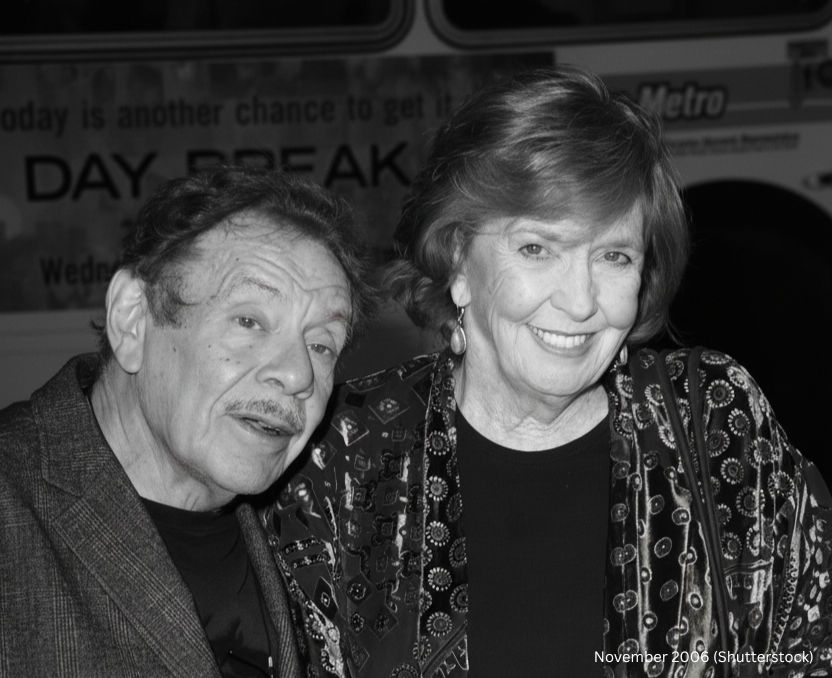
A legacy built in the limelight
Stiller and Meara’s success wasn’t built solely on talent or timing — it was built on narrative. Stiller and Meara met in their early 20s at an open ‘cattle-call’ audition in New York City that left Anne in tears. Both were struggling performers, both came from painful upbringings, and they connected immediately. They were married within a few months. As they scraped together enough performing gigs to stay afloat, they decided to extend their partnership into their work and formed a comedy duo. The journey of two outsiders finding their voice together became the emotional thread of everything they created.
Their comedy drew directly from their lived experience, delivered with honesty and humour, and audiences responded because the work felt authentic. By 1963, they were appearing regularly on The Ed Sullivan Show, eventually returning 36 times. In these characters, the audience also recognized themselves.
Stories as a strategic asset
This is the quiet power of storytelling in a family enterprise. Stiller and Meara weren’t positioning themselves as stars, but as narrators of a shared human experience. Their personal history wasn’t hidden — it was refined, shaped, and retold in ways that created trust with their audience. Over time, that trust became their brand.
The legacy of that approach extended beyond their own careers. Storytelling became the connective tissue of their household and their work. Creativity was modelled as something iterative and communal, not transactional. In that environment, the rising generation absorbed not just the mechanics of the business, but its meaning — why the work mattered, where it came from, and what it was meant to express.
We see this strength again and again among notable business families.
Many enduring family enterprises have long been intentional about both preserving and sharing their stories.
“They often view storytelling not as marketing, but as a governance tool — a way to pass on values, identity, and lessons from one generation to the next,” says Craig Postons, CEO of Creaghan McConnell Gould.
Here are three of our favourite examples that come to mind:
- The Kirk Kristiansen family (4th generation). LEGO is one of the clearest examples of a family enterprise using storytelling to reinforce culture and continuity. The family has repeatedly documented both its successes and crises, including the near-collapse of the company in the early 2000s. The LEGO Story, by Jens Andersen, emphasizes founder Ole Kirk Christiansen’s values, the family’s stewardship philosophy, and its exemplary model for balancing family influence and professional management.
- The Heineken family has carefully cultivated, for more than 150 years, the founder’s story and the family’s stewardship role over generations. Its corporate history, A Good Brew, focuses on the family’s long-term ownership, and particularly its focused preservation of family influence even as the business grew globally. The family’s story has consistently framed itself as steward rather than owner.
- The Mars family owns one of the world’s largest private companies, Mars Incorporated. It has been owned and operated by successive generations of the Mars family with an extraordinary discipline around culture. The Emperors of Chocolate functions almost as a family constitution and spotlights Mars’ decades-long focus in reinforcing its infamous “five principles:” quality, responsibility, mutuality, efficiency, freedom. This has become the Mars family’s own narrative to its storytelling.
Passing down the legacy
This legacy of storytelling eventually came full circle for Stiller & Meara. Decades later, their son Ben’s documentary, Stiller & Meara: Nothing Is Lost, took five years in the making. It’s a tender yet honest portrait of a showbiz family across three generations: Jerry and Anne, the originators; their children Ben and Amy; and Ben’s wife Christine and their children Ella and Quin, all of whom followed the family into the industry.
The film celebrates their lives and many successes, but also looks squarely at the hardships and the pressures, and how the family business impacts everyone involved. Stiller and Meara, and later their children, were running a business in public view.
For family businesses, this is the lesson Stiller and Meara leave behind: Endurance doesn’t come from separating personal history from professional identity, but from articulating it intentionally. When a family takes ownership of its story — its origins, values, impact, and evolution — it creates continuity.
Craig adds:
“The works of Stiller & Meara – and the other examples shared here from LEGO, Heineken and Mars – emphasize that truly enduring family enterprises pass down more than ownership and governance. They pass down a shared narrative about who they are, why they exist, the sacrifices they made, and the responsibilities each generation inherits. Storytelling is a legitimate asset for them.
The best business family stories are particularly instructive because they become part of governance itself — not just history, but a legitimate mechanism for preserving culture and decision-making for families across decades.
And isn’t that what it’s all about?”
References/further reading:
- Apple TV: Stiller & Meara: Nothing is Lost
Download and read this article as a PDF here.
Jessika McQueen is a freelance writer from Toronto.